
What's Going on In Student Opportunities?
A look back over 2025-26 and some forecasts for what’s ahead over the next academic year.
Drawing on insights from our training, consultancy, and close collaboration with the Student Opportunities Managers’ Network, this blog highlights key themes and trends that have emerged over the past 12 months.
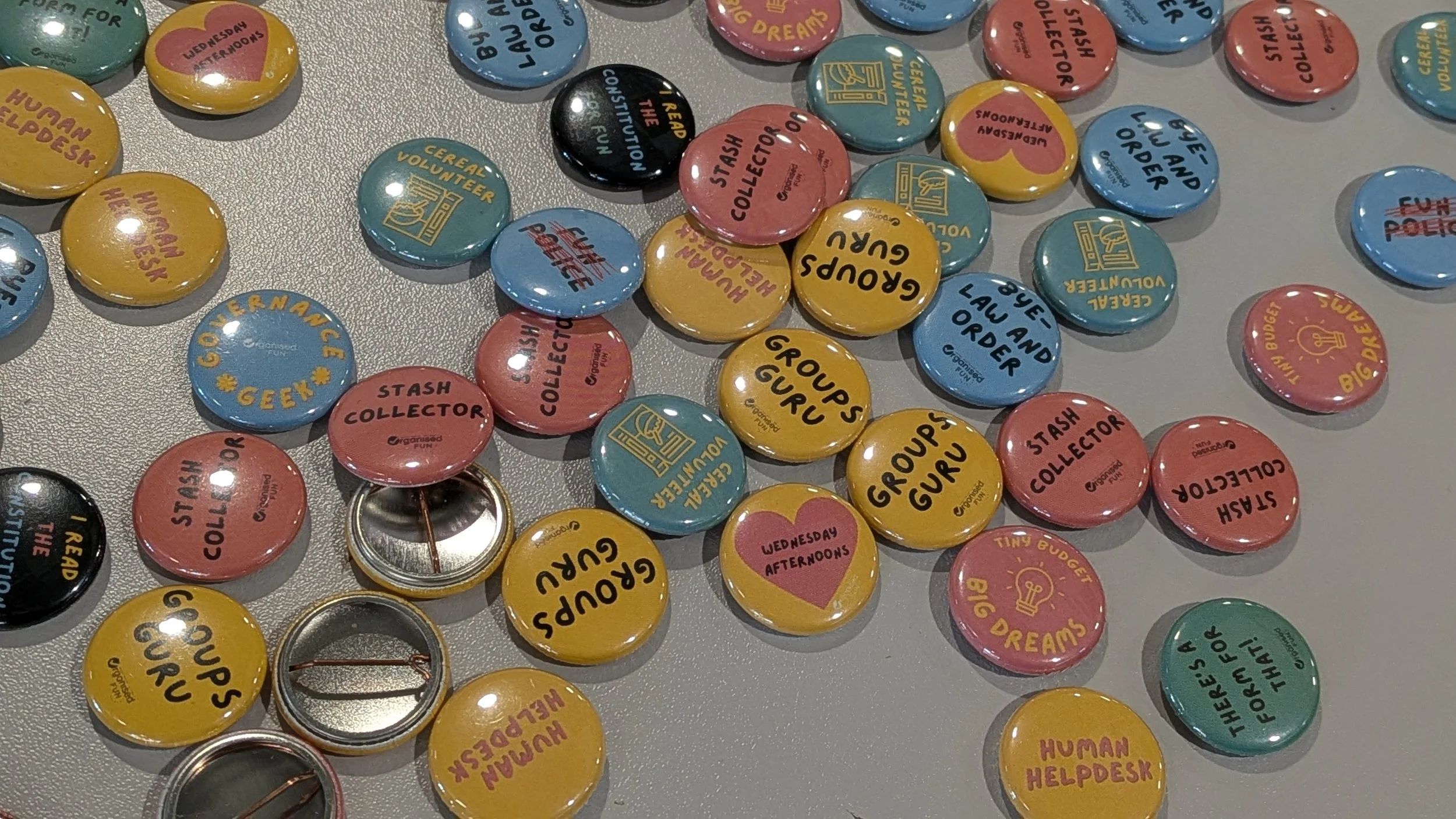
This blog is based on the session we delivered at Membership Services Conference 2026, What’s Going on in Student Opportunities? Every year we produce a selection of lighthearted (but highly coveted) badges to share. This year we felt particularly clever as we managed to theme our session around the badge designs. We know. Groundbreaking. Enjoy!
Tiny budget, big dreams 💰

‘Tiny’ may be an exaggeration, but financial strain across the higher education sector significantly impacts student opportunities. This instability complicates resource management and makes it difficult to define departmental ownership, a challenge particularly evident in the coordination of university sports.
Increased financial and time constraints on students require unions to adopt more responsible cost-management strategies. Opportunities Managers recently discussed student group membership fees, and landed on modest fees, typically between £2-5, often providing a better perception of value than entirely free models.
Unions are increasingly pressured to maintain or expand service delivery with diminishing resources. However, the sector currently lacks clear, proven models for transitioning to leaner operational frameworks. Hence ‘tiny budget, big dreams’ becomes a reality that causes us to be creative with our planning.
Excessive administrative oversight of student group finances may inadvertently hinder students' practical financial education. Students' unions are educational charities and we want to develop our students. Re-evaluating tight financial controls could allow unions to redirect energy more productively while empowering student leaders. This blog for Wonkhe explores this in more detail.
The decline of traditional, highly organised, visible, silly, fun student fundraising (RAG) models indicates a shift in how students engage with charitable activities. We hope RAG hasn’t died and look forward to doing some training on this in Autumn.
Human helpdesk 👱

With budgets tightening and expectations rising, we're all trying to do more with less; all while keeping that crucial "human" touch in our service delivery. We’re currently diving into several projects with larger SUs, exploring how to build robust, systems-led support for student groups that doesn't lose the warmth and relationship-building that makes the sector special.
The classic refrain we hear across the Student Opportunities Managers Network is, "If only the software was better!" We know digital infrastructure can either be a key helper or a major roadblock. It’s a recurring theme in our safety work, too; there’s often a massive opportunity to improve how we audit our decisions and ensure the right info reaches the right people. But a gentle reminder: fancy software can't fix a broken process. Before you invest in a snazzy interface, take a step back and map out what you’re actually trying to achieve and the pathways to get there.
And then, there’s the AI elephant in the room. We’re seeing a real mix of approaches: some teams are going all-in on AI, while others are hitting the brakes due to personal preference or student policy. But with big tech weaving AI into almost everything, we can’t just ignore it. It’s time to move past the "we will or we won't" debate and start making intentional choices. Where does AI fit for you? When is it acceptable for students to use it? It’s time to set some clear, responsible guidelines so we can navigate this together.
Not the fun police 👮

We’re called ‘Organised Fun’ for a reason. We genuinely want student opportunities to be rewarding and, well, fun! But we see the ‘organised’ part as shorthand for being safe, assured, and backed by an effective system. This year has felt like a massive leap forward in boosting the status of student opportunities, the safety work we’ve led on has urged us all to take a hard look at the vital work we do behind the scenes to make the magic happen.
With the release of the Safe Adventures report we’ve started a shift in how we operate because, honestly, the old way of just looking to each other for "good practice" wasn't cutting it. We realised many of us were sharing the same sleepless nights, unsure if we were truly getting it right. By looking outside the student sector, we’ve found better standards to meet. If safety isn't a top priority on your agenda yet, we really urge you to make it one. This isn’t about tightening the nuts and bolts to avoid a leak, but about re-building the boat, better, stronger, safer.
Finally, here’s a little ‘permission slip’ for you. While our instinct is to say yes and empower students, sometimes the most empowering thing you can do is say, “Yes, but...” By raising concerns and working together on solutions, we ensure that fun happens within a framework of knowledge and assurance. We want to get to a place where we can give a ‘confident yes’ because the right support is in place, even if that means occasionally having the courage to say no for the right reasons.
Cereal Volunteer 🥣

There’ve been many times this year at Organised Fun HQ where we’ve wondered if the traditional SU volunteering model is still fit for purpose. We’re asking a lot of our students for core service delivery and students aren’t as keen to take on high-input, long-term volunteering roles. As a result, we’re seeing a noticeable shift toward paid student staff roles replacing what used to be volunteer positions, as well as new, dispersed leadership models that don’t rely solely on one highly-engaged committee to keep everything running. We’re looking forward to exploring this one more over the coming years.
There’s also an interesting tension growing as we try to implement systems to keep things safe and legally compliant. By 'systemising' these opportunities through polished websites and mapped-out volunteer journeys, we risk losing that authentic, 'grassrootsy' feel that students crave. We might not like it, and we might not feel it, but to many students, SUs are 'the man'. Students are pushing back against being part of a corporate-feeling system. It’s a challenge to maintain that organic spark while still providing the professional infrastructure needed for a modern union.
We’ve also been diving deep into the legal side of things lately. In the UK, volunteers don’t have a clear legal status, which gets even murkier when SUs rely on them for core service delivery. We need to be certain about who our volunteers are and ensure they’re operating safely—especially when it comes to managing data and staying GDPR compliant. Supporting our volunteers properly means ensuring they have the right legal footing and that we are adequately assured of the quality of their work.
Finally, a quick but important heads-up fresh from the Department for Education: from September 1st, there are new requirements for DBS checks. These apply to any volunteers involved in teaching, training, instructing, caring for, or supervising children. It’s another layer of compliance to navigate, but a vital one for keeping everyone safe as we move into the new academic year!